Designing or Adapting Your Office for Hybrid Working in 2026
Hybrid working might have seemed like an alien concept pre-pandemic, but it’s now the norm for many industries. A 2025 ONS survey found that 28% of working adults in the UK worked in a hybrid manner over a 3-month period. With this shift comes challenges and many team members feel their office isn’t equipped to fully adapt to the hybrid working model and the variety of spaces needed, including collaborative, focus and social zones. Hybrid office design is now essential not just for productivity, but also for attracting and retaining talent.
For business owners and stakeholders, it’s important to make the workspace welcoming and functional, maximising face-to-face time and ensuring staff really want to be in the office on their in-person days. In this guide, we’ll walk through how hybrid offices work, what spaces they need, and key factors to consider when designing the hybrid office, or planning the fit out or refurbishment to coincide.
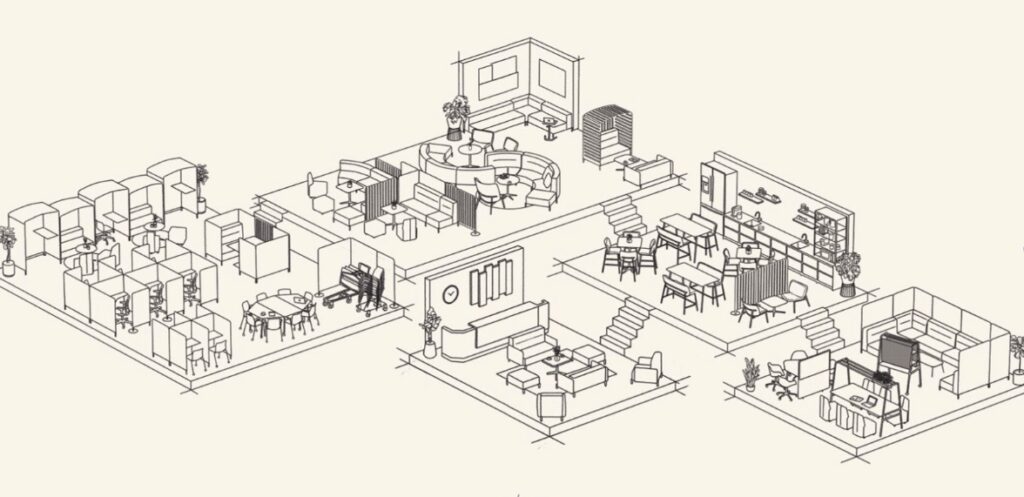
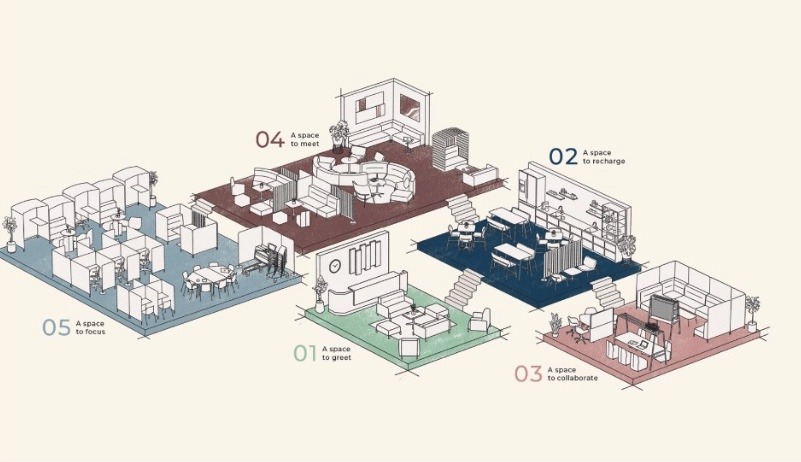
What Is a Hybrid Office and Why Does It Matter?
A hybrid office blends physical and digital working environments to support employees who split their time between home and the workplace. Rather than rows of fixed desks, hybrid office design focuses on flexibility, adaptability and purpose-driven zones that support collaboration, individual work, hybrid meetings and social interaction.
The goal is to create a workspace that feels less like a place you have to go, and more like a place you want to go; a hub that supports productivity, connection and wellbeing.
Core Zones You Need in a Hybrid Office
Zones help structure the office so different activities have the right environment. Typical zones include:
- Collaboration zones for group work and brainstorming.
- Focus or quiet zones for tasks requiring concentration.
- Hybrid meeting areas equipped for both face-to-face and virtual participation.
- Social and breakout spaces for connection and rest.
- Hot-desking spaces to suit employees who prefer a traditional style of office working.
Zones are easy to understand but can be difficult to put into practice without careful planning. Whether you’re moving to a new office and doing a full fit out, refurbishing your existing office, or simply making a few tweaks, it’s important to get the basics right. Fusion can help turn your hybrid office ideas into a reality.
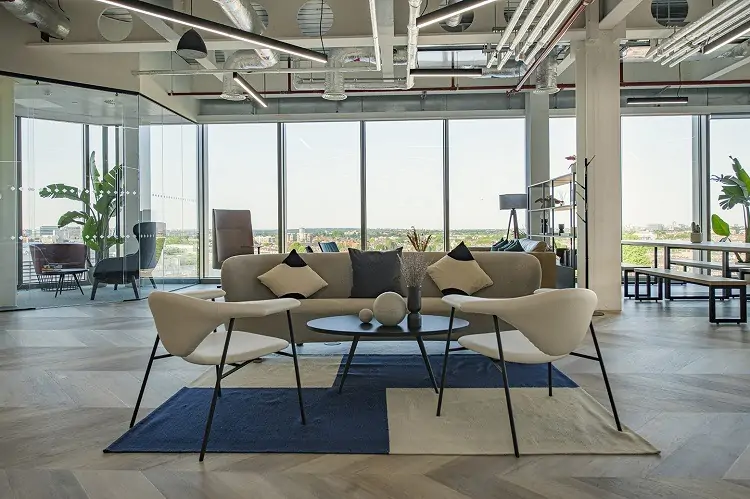
Collaboration Is Still a Top Reason to Come In
Collaborative work is consistently cited as the number one reason employees choose to come into the office. In fact, a recent study suggests nearly half of workers find collaborative tasks easier to do in person. Nothing replaces the energy of face-to-face time, spontaneous idea sharing, or quick whiteboard sessions. Think about soft seating which encourages informal discussions, writable surfaces to enhance team meetings, such as our sliding whiteboards, and top-of-the-range AV setups to ensure those WFH colleagues don’t miss out. Updating office furniture to more collaborative styles can be a simple solution to those who aren’t ready for a full office refurbishment.
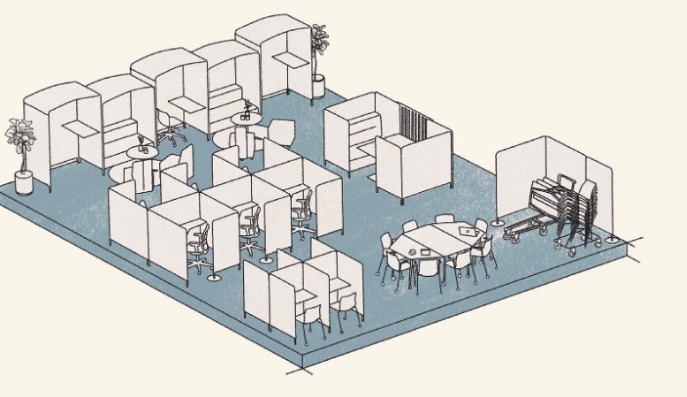
Focus and Hot-Desking Areas
Although socialisation is critical, your office also needs zones where staff can focus on work and get their to-do-list done. This could include:
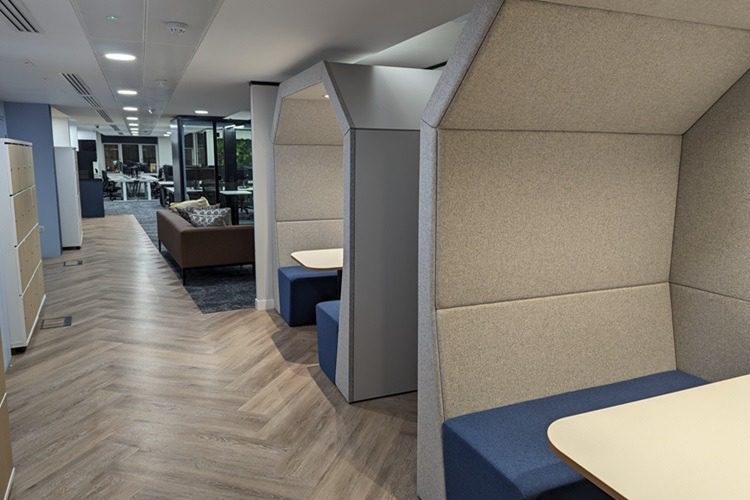
- Acoustic booths or pods for calls and concentrated work.
- Quiet zones with soft seating or screening.
- Hot desks with charging access for traditional laptop work.
These zones support a range of working styles to suit the hybrid and flexible working models.
The Evolution of Meeting Spaces
Meeting rooms with video connectivity are standard amongst office spaces, but ensuring the setup is right for hybrid working is the key puzzle piece. Clear camera sightlines so remote participants feel included, microphones, controlled acoustics and even background sound masking equipment can all be important when it comes to the modern meeting spaces. It doesn’t always mean blowing the budget, but hybrid meeting spaces are a very important part of the plan.
Social and Breakout Spaces That Make Coming In Worth It
The social element of hybrid work can’t be overstated. Offices today often incorporate:
- A “resimercial” or home-from-home design style in social spaces.
- Comfortable breakout lounges with biophilic design elements.
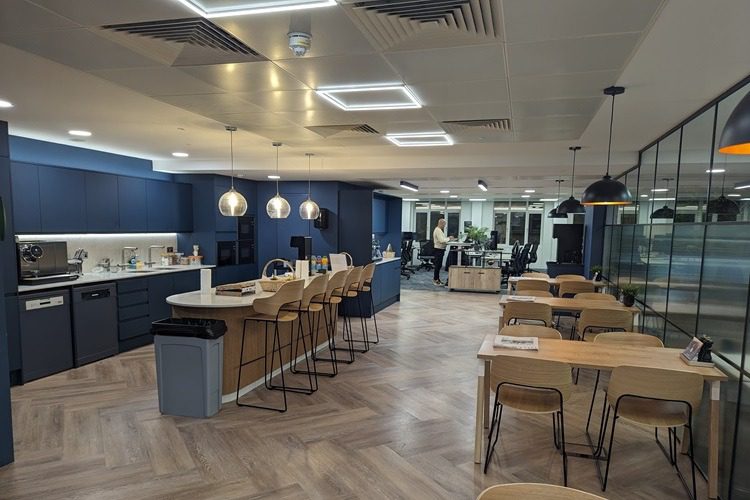
- Kitchen hubs that serve as social zones.
- Relaxation or recharge areas for mental breaks.
Your social spaces don’t need to be huge, if space is at a premium, and even the smallest touchdown space can still feel welcoming. These areas help build connections, boost morale and make the office feel like a community.
Don’t Forget the Backbone: Technology & Infrastructure
Hybrid working only thrives when the technology backbone is solid:
- Strong, consistent Wi-Fi everywhere.
- Room and desk booking systems.
- Planned cabling and power access.
- Collaborative digital tools.
Even modest technology upgrades during a refurbishment can transform the hybrid experience.
Acoustics: It’s More Important Than Ever
Open plan offices are popular but can be noisy. To support focus and collaboration simultaneously, consider:
- Sound absorption (panelling, carpet and fabrics).
- Add sound blocking via partitions.
- Use sound masking to balance noise levels with intentional background noise.
Think of acoustics as a hidden design layer that maximises productivity and comfort. At Fusion we work with acoustic specialists to pinpoint the best tactics to reduce unwanted sound and ensure your zones are functioning to the best level.
Ready to Bring Hybrid Working to Life?
Hybrid office design isn’t a one-off exercise; it’s a strategy that evolves with your workforce. Gather employee feedback, consider how spaces are currently utilised and be ready to adapt. This isn’t a new phenomenon, but many offices are still catching up with what it takes to truly support employees to be flexible and autonomous in 2026 and beyond. Whether you’re planning a full fit out, refreshing your space with an office refurbishment, or looking at targeted upgrades, Fusion can help you design a hybrid office that enhances productivity, wellbeing and staff satisfaction.
Get in touch with us today to see how we can support your hybrid office design goals.