What’s driving the next wave of workplace design
Office design has moved a long way since the late 2010s. The role of the workplace has shifted from a place where everyone must be, to a place people choose to be for collaboration, focus and connection. As hybrid working becomes the norm, businesses are rethinking the purpose of their offices and how those spaces support their employees.
The trends shaping office design for 2026 all point in one direction: adaptable, human-focused environments using smart technology, natural materials and thoughtful space planning. Below is a look at the ideas influencing modern workplaces today.
Hybrid working and flexible spaces
One of the defining changes in recent years is the need for offices to work harder for a fluctuating number of people. Fixed desk layouts are giving way to agile working. Instead of allocating space by headcount, businesses are designing a mix of settings that support a wide range of tasks.
Typical layouts now include:
- Spaces for collaboration and teamwork
- Quiet zones and individual focus areas
- Hybrid meeting rooms with top AV technology
- Social and informal spaces that encourage connection
- Reconfigurable areas that can be adapted for training, workshops or events
This flexibility allows organisations to adjust their office space as working patterns evolve and as teams grow or contract.
Biophilic design continues to reign supreme
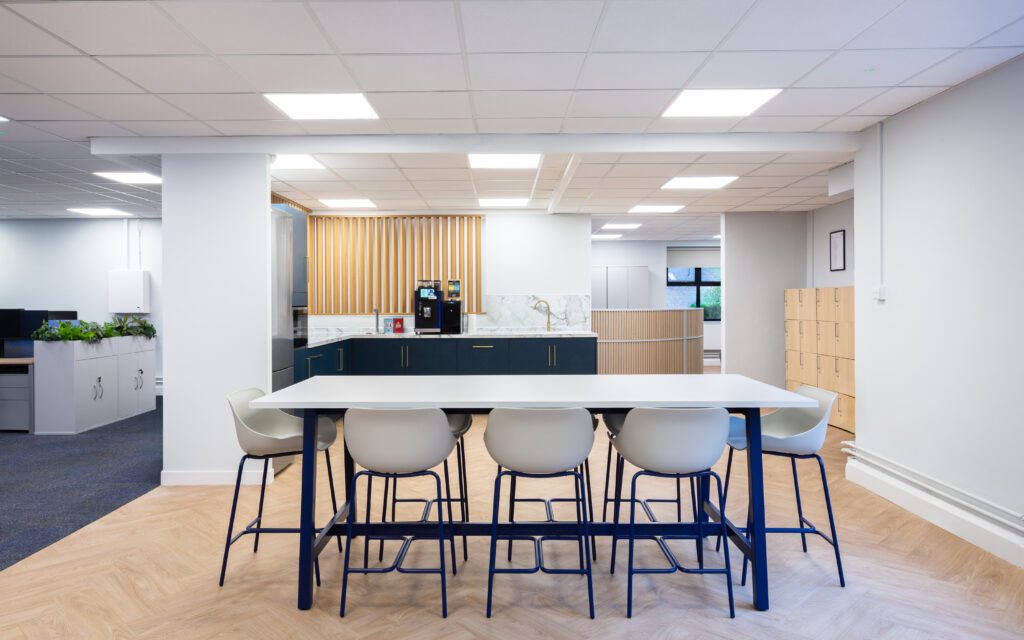
Biophilic design, the concept of connecting people with nature, has become much more mainstream, for good reason. Offices for 2026 will increasingly feature plants, natural textures and materials, and layouts that maximise access to daylight.
Biophilic office design might incorporate:
- Indoor planting and living walls
- Timber, stone and other natural materials
- Views to the outdoors
- A warmer, more organic colour palette
The aim is not only to improve aesthetics but also to support wellbeing, reduce stress and create environments that help people feel grounded and focused.
Smart technology and intelligent buildings
Technology has become deeply woven into office design. Modern workplaces use discreet systems that make the environment more efficient and easier to use. From simple PIR sensors for your lighting to reduce electricity consumption when areas are unoccupied, to smart lighting which adjusts the colour temperature as required, technology is advances quickly, helping businesses run more efficiently and support hybrid teams. AV will continue to improve in years to come, allowing hybrid or flexible working to continue to flourish.
Comfort without the loss of the ‘corporate’
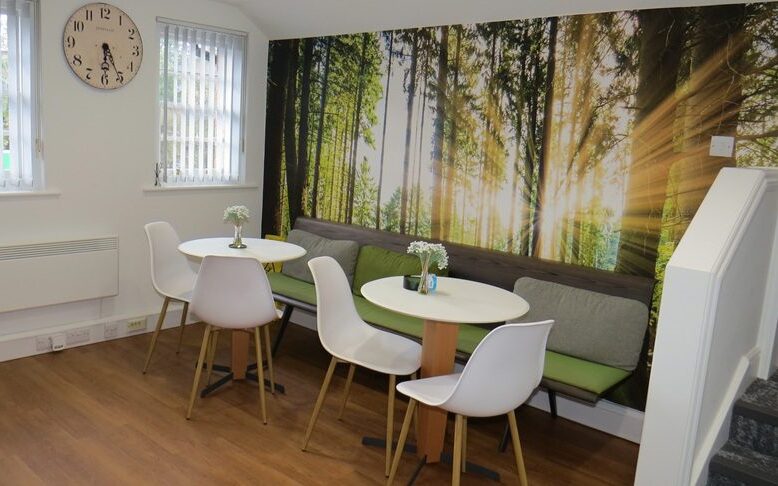
“Resimercial” design, a blend of residential comfort with commercial durability, continues to rise. People now expect an office to feel inviting, warm and comfortable without losing functionality. Soft furnishings, lounge-style zones and home-from-home décor will continue to develop in 2026. Office furniture will always be extremely important in corporate settings, due to durability, design and ergonomics to name but a few, but a heavier residential influence will be seen with newer ranges.
This approach helps create a welcoming environment while supporting wellbeing and productivity. It also makes the office a more attractive destination in the age of hybrid work.
The importance of acoustics and privacy
Open-plan offices remain popular, but there is far greater awareness of acoustic performance and the need for privacy. Offices in 2026 use a combination of design strategies to reduce noise and support focused work.
This often includes:
- Fabric panels, including on walls and ceilings, and soft furnishings
- Enclosed focus pods and small open booths
- Zoning to separate quiet areas from collaborative ones
- Improved spatial planning to reduce sound transfer
Acoustics now sit near the top of the design agenda rather than being an afterthought.
Sustainability as standard
Sustainable design is continuing to shift from an optional extra to an essential part of responsible office development. Businesses are looking for environmentally conscious materials and products with a longer life span, whilst manufacturers are offering more cost-effective solutions to help businesses make sustainable choices.
Things to think about:
- Low-VOC paints and finishes
- Recycled and recyclable materials or furniture, including upcycling
- Energy-efficient lighting and HVAC
- Modular furniture which can adapt with your business
- Designs that improve indoor environmental quality, such as better air circulation and natural light
Many companies are also incorporating sustainability goals into their refurbishment strategies, making environmental performance part of the brief from the outset.
Colour for 2026

Pantone’s Colour of the Year for 2026, although shrouded in some controversy, backs up the idea that interiors continue to lean towards calm, natural and grounded aesthetics. ‘Cloud Dancer’, the Pantone colour for 2026, is a soft white, suggesting the world needs a step back from overstimulation. Although many are commenting on the safe choice, the colour allows a neutral base which can easily be utilised within office design. Colour palettes are moving towards earthy tones and subtle variations rather than very bold or high-contrast schemes.
This creates offices that feel both contemporary and timeless, helping spaces age well and maintain relevance for longer.
An office with purpose
Modern offices are designed with a clear purpose: to support you to do your best work, to bring people together, to express a company’s brand identity, and to promote wellbeing in the workplace. The best workplaces of 2026 will consider the office design trends above, and will prioritise comfort, adaptability and human experience.
Whether the goal is attracting people back to the office, supporting hybrid teams or modernising an existing workspace, these trends provide a strong foundation for creating environments that work for the future.